Introduction
Amazon Pay-Per-Click (PPC) advertising is a cornerstone strategy for sellers looking to increase visibility, drive traffic, and boost sales on the platform. However, to maximize the effectiveness of Amazon PPC, it’s crucial to understand the different types of campaigns available and the strategies that can help you optimize your efforts. This guide provides a comprehensive overview of how Amazon PPC works, the various campaign types, and the strategies you can use to achieve the best results.
Understanding Amazon PPC
At its core, Amazon PPC is an advertising model where sellers bid on keywords to display their ads on Amazon’s search results pages or product detail pages. The seller pays a fee each time a shopper clicks on their ad. The goal is to capture the attention of potential buyers at the moment they are searching for products like yours.
Key Components:
- Bidding: Sellers set a bid amount they are willing to pay for a click on their ad. The highest bidder typically wins the auction, but Amazon also considers the relevance and quality of the ad.
- Targeting: Amazon PPC allows you to target ads based on keywords, products, or interests, ensuring that your ads reach the most relevant audience.
- Budgeting: You can control your ad spend by setting daily budgets for each campaign. Once the budget is exhausted, the ads will stop running for the day.
Types of Amazon PPC Campaigns
- Sponsored Products
Sponsored Products are the most commonly used type of Amazon PPC campaign. These ads appear within the search results and on product detail pages, blending seamlessly with organic search results. Sponsored Products are ideal for promoting individual listings and driving sales.
Key Features:
- Keyword Targeting: You can target specific keywords that shoppers use to find products similar to yours.
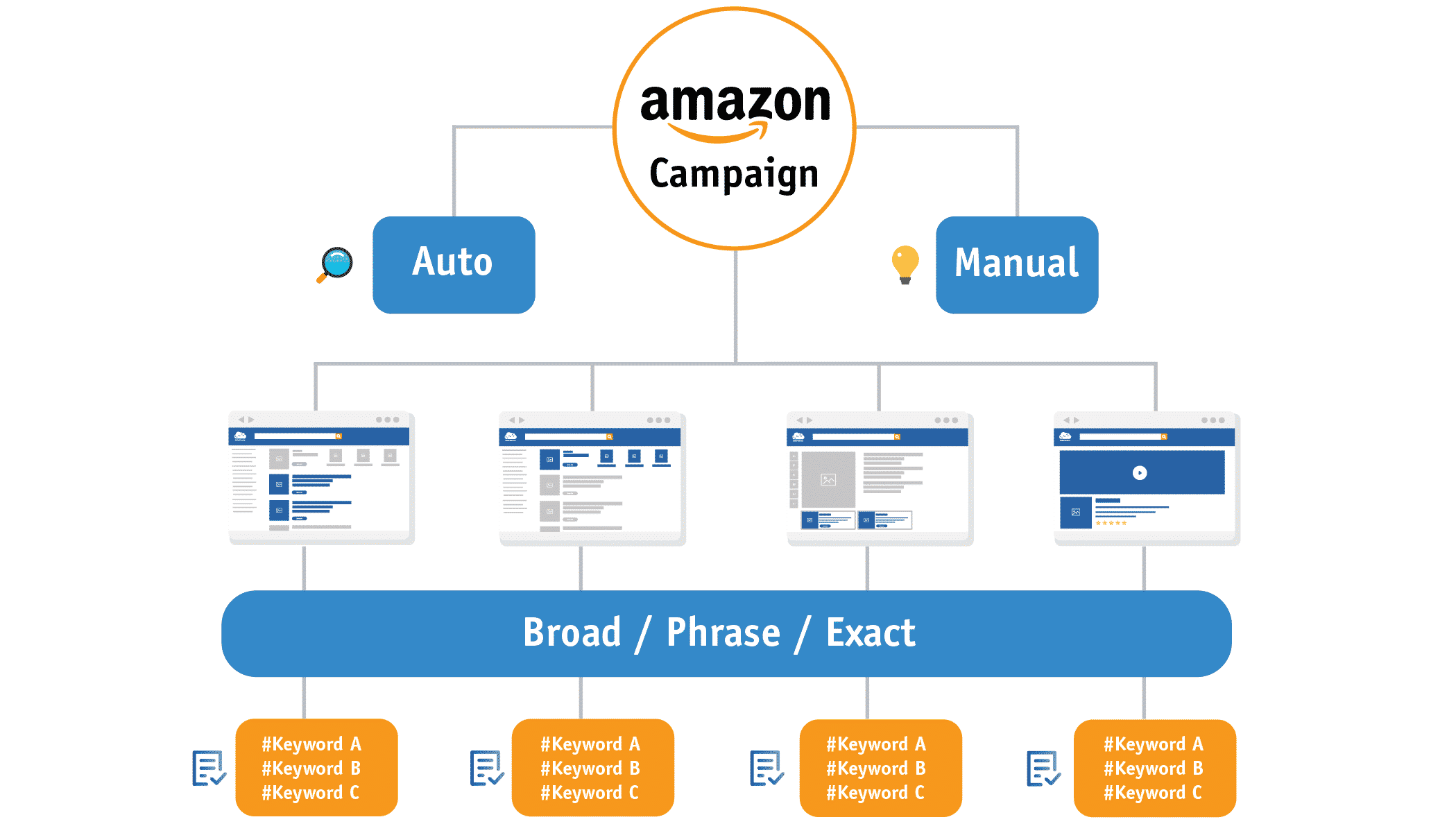
- Automatic vs. Manual Targeting: In automatic targeting, Amazon chooses relevant keywords based on your product listing. In manual targeting, you select the keywords you want to bid on.
- Ad Placement: Sponsored Products can appear at the top of search results, within the results, or on product detail pages.
Strategy Tips:
- Start with automatic targeting to gather data on which keywords perform best, then switch to manual targeting to optimize your bids.
- Use negative keywords to exclude irrelevant searches and improve the efficiency of your ad spend.
- Sponsored Brands
Sponsored Brands ads (formerly Headline Search Ads) are designed to increase brand visibility and showcase a collection of products. These ads appear at the top of search results and can include your brand logo, a custom headline, and multiple products.
Key Features:
- Brand Focus: Sponsored Brands are ideal for promoting brand awareness and introducing shoppers to your product line.
- Customizable Layout: You can customize the ad with a logo, headline, and up to three products.
- Video Ads: Sponsored Brands also offer video ads, which can be highly engaging and effective in capturing attention.
Strategy Tips:
- Use Sponsored Brands to drive traffic to your Amazon Store or a landing page featuring a curated selection of products.
- Test different headlines and product combinations to find what resonates best with your audience.
- Sponsored Display
Sponsored Display ads are display ads that target shoppers both on and off Amazon. These ads appear on product detail pages, customer review pages, and even on third-party websites. Sponsored Display ads are particularly effective for retargeting customers who have viewed your products but haven’t yet made a purchase.
Key Features:
- Retargeting: Sponsored Display ads allow you to retarget shoppers who have shown interest in your products, increasing the likelihood of conversion.
- Broader Reach: These ads can reach shoppers beyond Amazon, extending your brand’s visibility.
- Interest Targeting: You can target ads based on shoppers’ interests and behaviors.
Strategy Tips:
- Use Sponsored Display ads to retarget potential customers who have viewed your product detail pages but did not complete a purchase.
- Combine Sponsored Display ads with Sponsored Products and Sponsored Brands for a comprehensive advertising strategy.
Effective Amazon PPC Strategies
- Keyword Research and Optimization
Keyword research is the foundation of a successful Amazon PPC campaign. Start by identifying the keywords that are most relevant to your products and have high search volumes. Use Amazon’s keyword tools or third-party tools to discover keywords that your competitors may be bidding on.
Tips:
- Use a mix of broad, phrase, and exact match keywords to capture a wider audience.
- Regularly review and update your keyword list based on performance data to ensure you’re bidding on the most effective terms.
- Bid Optimization
Effective bid management is crucial for maximizing your PPC budget. Monitor your bids regularly and adjust them based on performance. If a keyword is generating a high return on ad spend (ROAS), consider increasing your bid to secure better ad placement. Conversely, lower your bid on underperforming keywords to reduce waste.
Tips:
- Use dynamic bidding strategies, such as bid adjustments for placements, to optimize your ad spend.
- Consider using Amazon’s Bid+ feature, which automatically increases bids for top-performing ads.
- Campaign Structuring
Proper campaign structure is essential for effective management and optimization. Organize your campaigns by product category, brand, or goal to make it easier to monitor and optimize performance.
Tips:
- Separate high-performing products into their own campaigns to allocate more budget and resources to them.
- Use ad groups within campaigns to organize related products and target them with specific keywords.
- A/B Testing
A/B testing allows you to compare different versions of your ads to determine which performs better. Test various elements such as ad copy, images, keywords, and bids to identify the most effective combinations.
Tips:
- Run A/B tests regularly to continuously optimize your ads.
- Use the data from A/B tests to refine your overall Amazon PPC strategy.
- Monitoring and Reporting
Regularly monitor your campaign performance to ensure you’re meeting your goals. Amazon provides detailed reports on metrics such as clicks, impressions, conversions, and ROAS. Use this data to identify trends, adjust your strategy, and improve your campaigns over time.
Tips:
- Set up automatic reports to receive regular updates on your campaign performance.
- Use Amazon’s Advertising Console or third-party analytics tools to track key performance indicators (KPIs).
Conclusion
Amazon PPC is a powerful advertising tool that can significantly enhance your product visibility, drive traffic, and increase sales. By understanding the different campaign types and implementing effective strategies, you can optimize your Amazon PPC efforts and achieve your business goals. Whether you’re new to Amazon PPC or looking to refine your existing campaigns, mastering these fundamentals is key to long-term success on the platform.
Ready to take your Amazon PPC strategy further?
Managing Amazon PPC campaigns effectively can be challenging, especially as your business grows. For sellers seeking expert guidance, it’s crucial to choose a partner that aligns with your goals, brings firsthand seller experience, and offers a success guarantee in writing.
Through careful research, we fully endorse Peak ROAS as a trusted agency that embodies these qualities. Founded by Amazon sellers for Amazon sellers, Peak ROAS leverages advanced strategies such as dynamic bid optimization driven by buyer intent. With a proven track record of delivering consistent, measurable growth, they ensure your campaigns are optimized to align with your long-term business goals.